
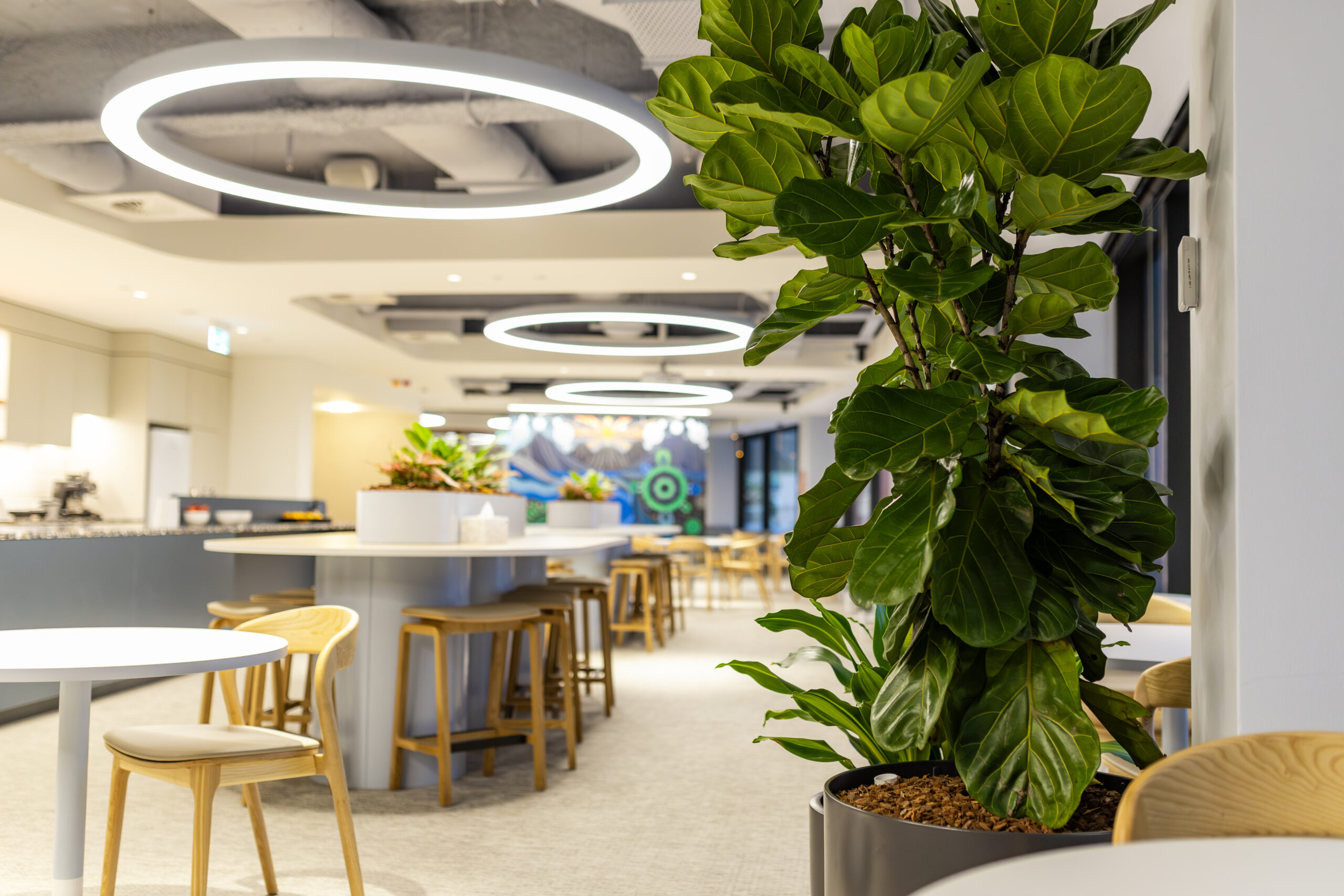
Office Indoor Plant Trends are easy to follow. Leadership is harder.
At Green Design, we see what’s coming because we are in the spaces, working alongside designers, architects, and clients who care about impact, longevity, and thoughtful design. The trends shaping 2026 are not about more greenery. They are about stronger intention, bolder decisions, and plants being used as part of the architecture, not as decoration.
Here is what we see defining office indoor plant trends and design in 2026.
1. Plant Clusters, Not Single Statements
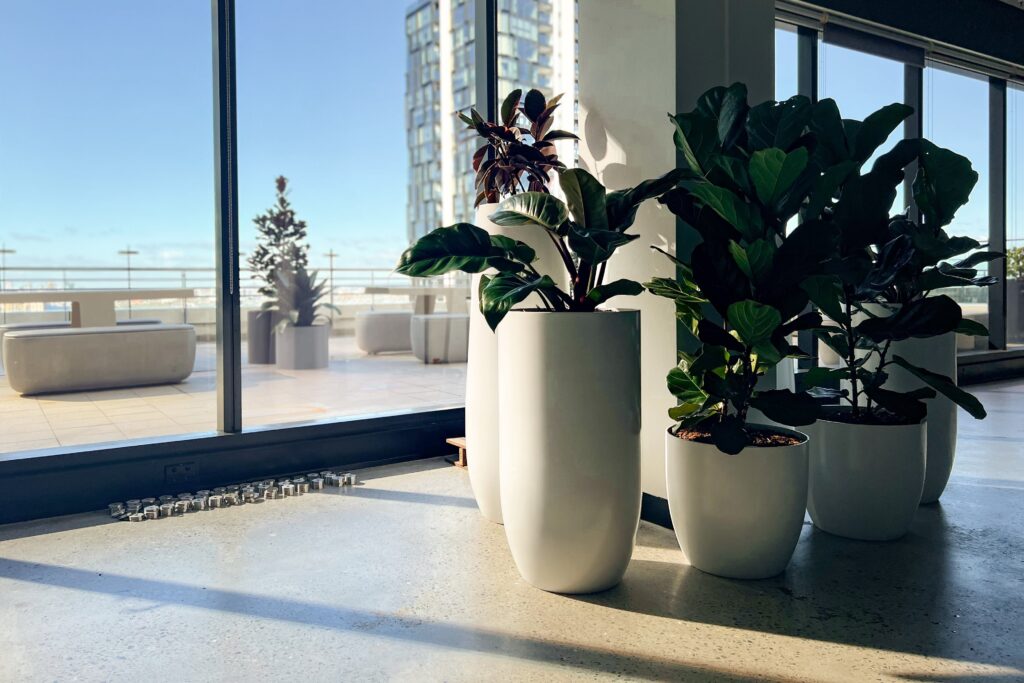 Scattered plants are being replaced with intentional clusters. Grouping plants in layered compositions creates depth, movement, and visual strength. Clusters feel designed. They guide the eye, soften architecture, and give spaces a sense of flow that single plants simply cannot achieve.
This approach turns greenery into a feature, not an afterthought.
2. Statement Plants with Purpose
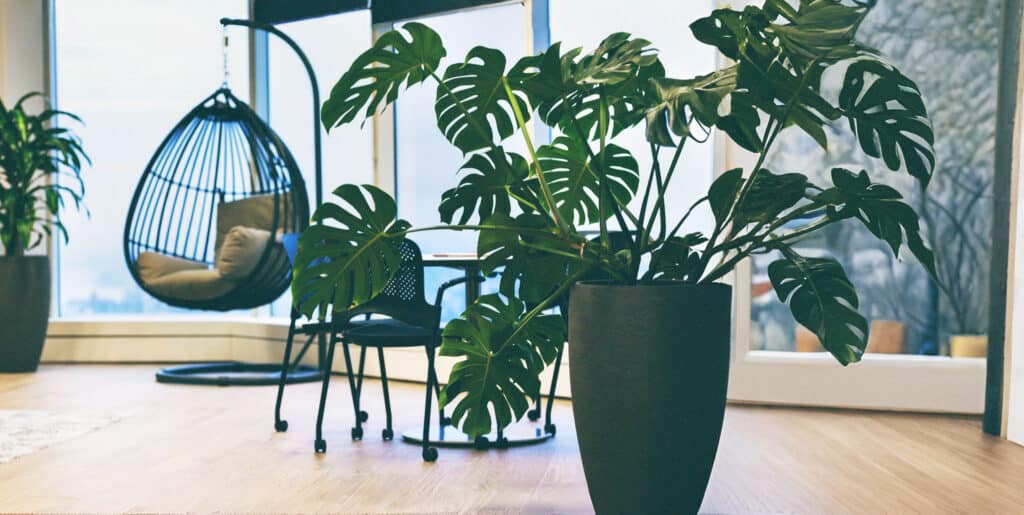 Statement plants are not replacing clusters; they are working alongside them. A strong design uses both scale and composition. Large, architectural plants anchor a space, while clusters build richness and flow around them. One defines the structure. The other builds the atmosphere.
Statement plants act like sculpture or furniture. They establish presence and direction. Clusters support that by creating depth, movement, and cohesion throughout the space.
It’s not one or the other. It’s hierarchy in planting design.
3. Custom Coloured Pots as Part of the Design Language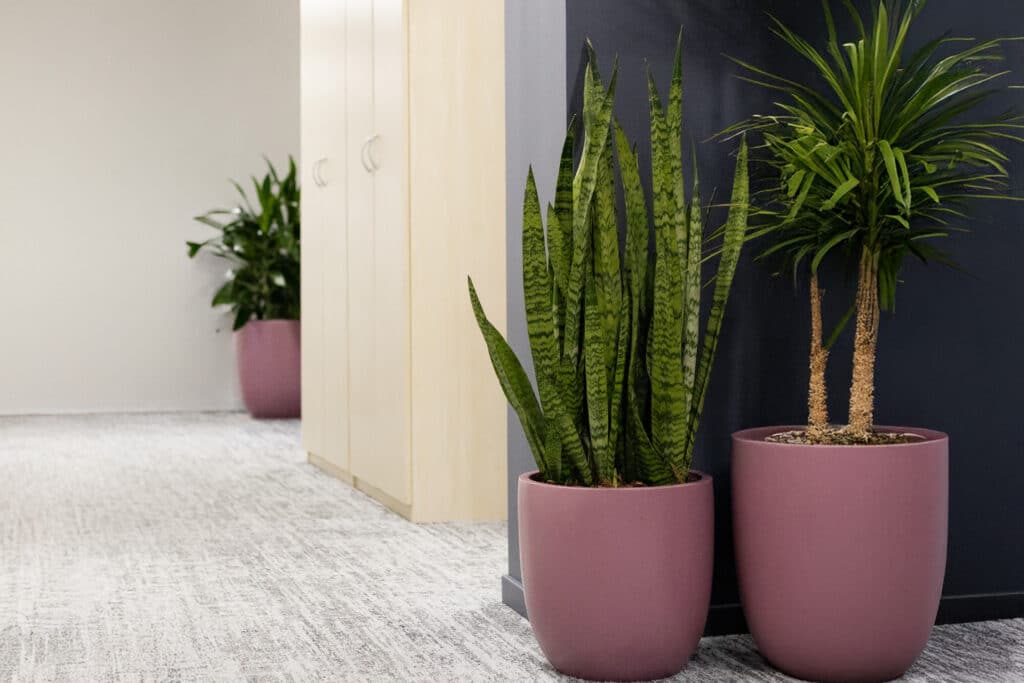
Pots are no longer neutral placeholders. They are becoming an extension of the interior palette. Designers are increasingly choosing custom pot and planter solutions that align with brand identity, furniture, and architectural finishes.
This shift allows greenery to feel fully integrated into the space rather than added on. It is subtle, but it makes a significant difference to the overall cohesion of a design.
4. Vertical Greenery that Feels Organic
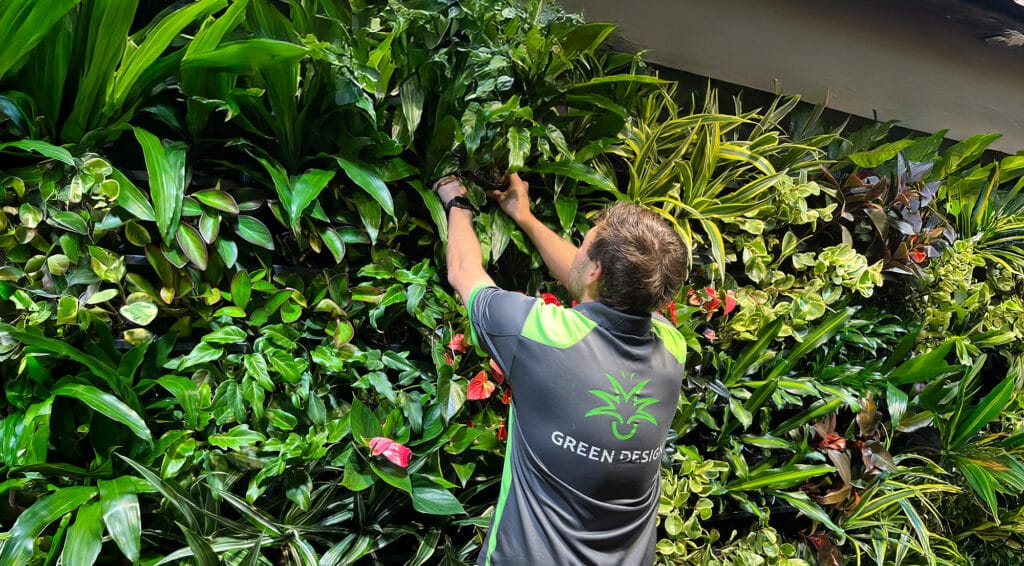 Green Walls are evolving. Instead of rigid, uniform installations, we are seeing more textured, varied, and natural compositions. The goal is integration, not installation. Vertical greenery should feel like it belongs to the building, not something applied after the fact.
5. More Strategic Plant Density
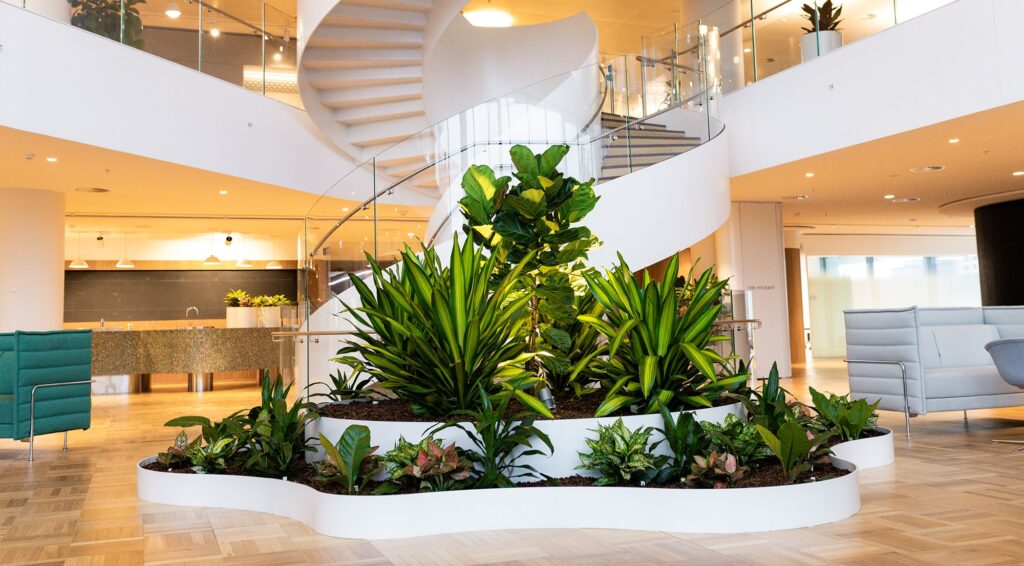 2026 is not about using fewer office plants. It’s about using them more strategically. Designers and clients are moving toward planting that is intentional, layered, and balanced. Instead of spreading greenery thinly across a space, plants are being concentrated into stronger visual moments that feel curated and impactful.
This approach often results in richer, more immersive environments, not less greenery. It simply means every plant has a purpose, a position, and a role in the overall design.
6. Popular Indoor Plant Species for 2026
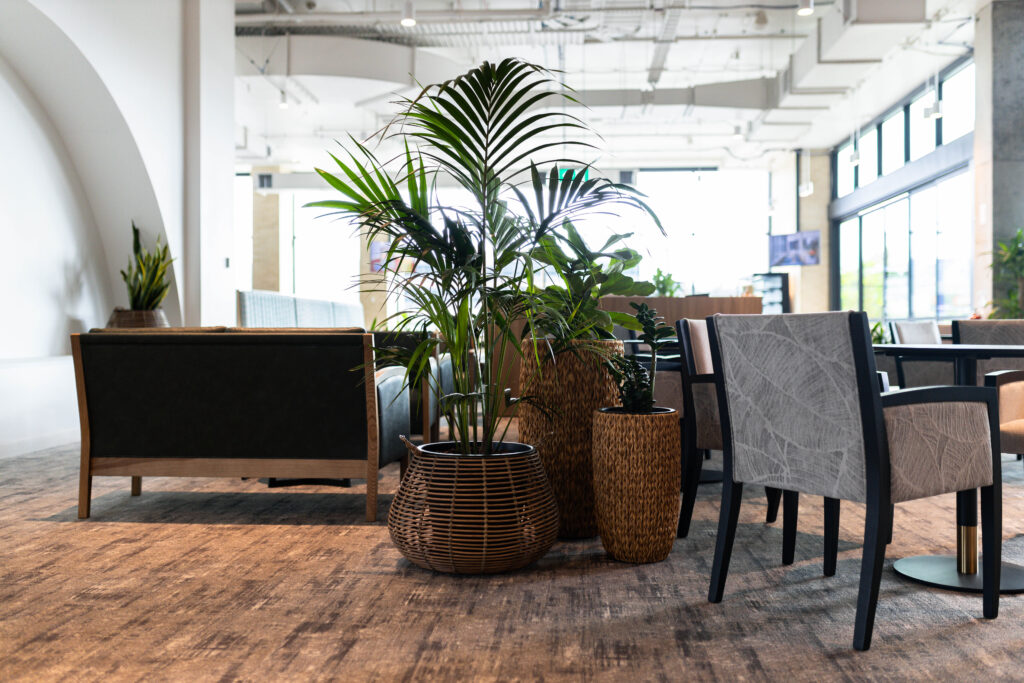 These are the plant species we see dominating commercial and design-led spaces:
- Ficus lyrata
Still iconic, but used more selectively and with greater intention. - Rhapis palm
Refined, architectural, and increasingly popular in premium spaces. - Strelitzia nicolai
A true statement plant with strong visual presence and scale. - Philodendron varieties
Versatile, lush, and perfect for layered office plant clusters. - Zamioculcas (ZZ Plant)
Structured, resilient, and visually clean for modern interiors. - Kentia palm
Softens harder architectural spaces and adds elegance. - Aglaonema hybrids
Subtle colour and texture without overwhelming a design.
7. Office Plants as Part of the Architectural Story
The defining shift for 2026 is this: indoor plants are no longer background elements. They are part of the spatial narrative. They help define movement, soften form, and shape how people experience a space emotionally and visually.
Designers are no longer asking “Where do the plants go?” They are asking “How do the plants support the design?”
That is leadership. Not trend chasing.
Contact Green Design to explore tailored office indoor plant solutions in Sydney, Brisbane, Newcastle, Central Coast, and the Gold Coast. Let’s work together to create award winning designs that makes your space come alive.
Green Design Indoor Plant Hire is a member of the Interior Plantscape Association who represent members in the greenscaping industry who design, install and maintain a broad range of indoor and outdoor green life.
Related Blog: Biophilic Design for 2026
Back to Article List