
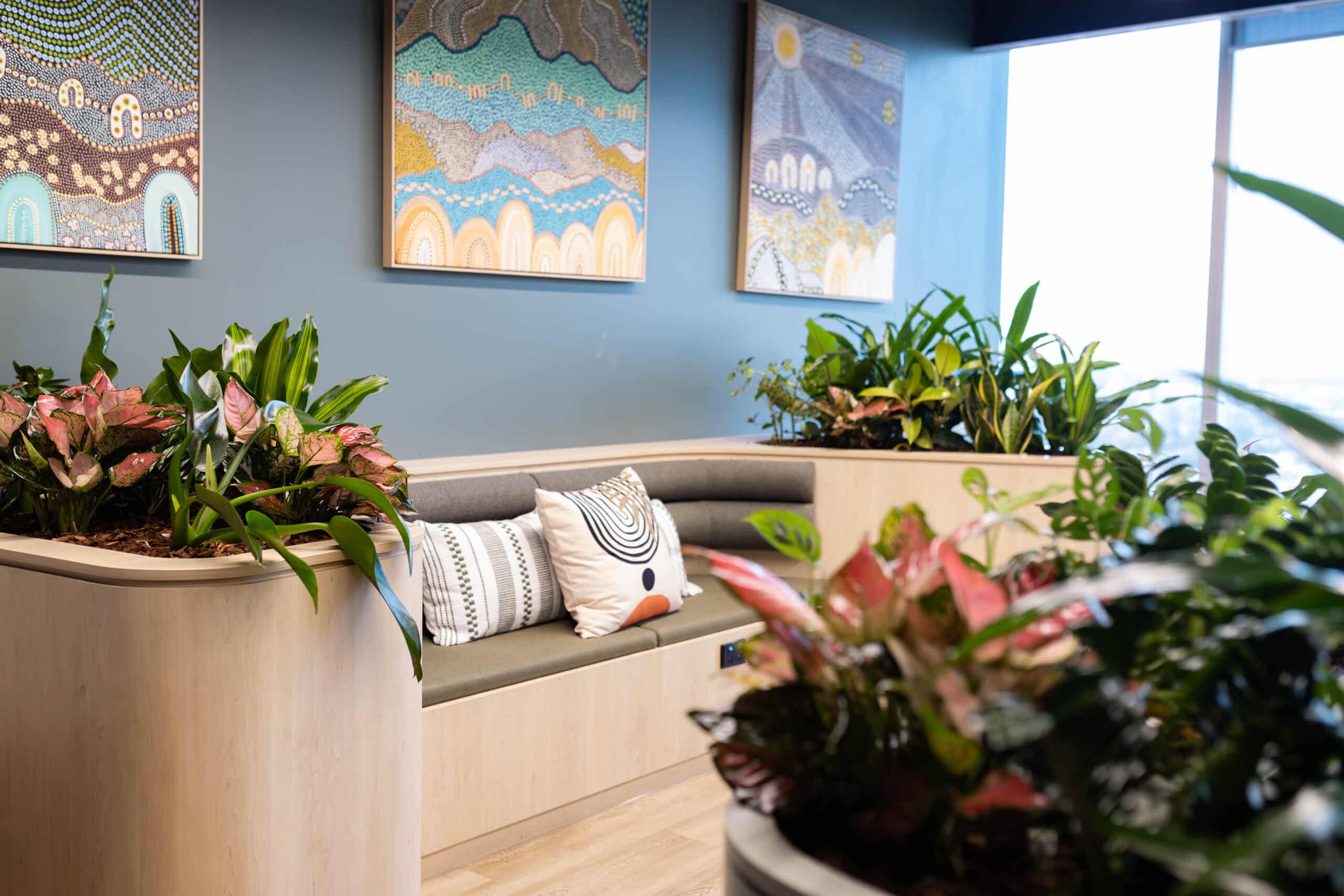
Sydney workplaces come in all shapes and styles. There are contemporary glass towers in the CBD, converted warehouses and heritage buildings in the inner city, sprawling corporate campuses further out, and new developments designed with greenery already incorporated into the architecture.
Each presents a very different environment for indoor plants.
For businesses considering indoor plant hire in Sydney, understanding the style of the building, its location and the functions within it can help determine not only which plants are suitable, but how the entire planting scheme should be designed and maintained.
Planting for Sydney CBD Offices
Sydney’s CBD is home to some of the city’s most contemporary commercial buildings. Think large floorplates, extensive glazing, sophisticated air conditioning systems, premium finishes and, increasingly, architecture designed with employee wellbeing in mind.
These environments can offer wonderful opportunities for indoor planting, but they also have their own challenges.
Large expanses of glass can create considerable variations in heat and light throughout the day, while highly controlled air conditioning can affect temperature and humidity. The sheer scale of modern commercial interiors also influences the type and size of planting needed to complement the architecture.
At one Sydney office, for example, the workplace incorporated several different forms of greenery, including a green wall, moss wall, integrated joinery, floor plants and elevated planting. The installation demonstrated how planting can become part of the interior architecture of a contemporary CBD workplace rather than simply something added afterwards.
High rise buildings can also present practical considerations around security, lift access and restrictions on installation and servicing times.
Heritage Buildings Given a New Life
Sydney has an extraordinary mix of older commercial buildings that have been restored, repurposed or transformed for modern use.
From grand heritage properties in the CBD to former warehouses and industrial buildings across the inner city, these spaces often retain architectural features that give them a very different character from a modern office tower.
They can also have less predictable conditions for plants.
Thick walls, smaller or unusually positioned windows, high ceilings and irregular layouts can create significant differences in natural light and temperature from one area to another.
The InterContinental Sydney provides an interesting example. Its heritage architecture forms an important part of the experience, so planting across areas from the entrance through to guest spaces and the rooftop needs to complement that character rather than overpower it.
In buildings like these, successful planting is often about respecting what is already there.
Corporate Campuses and Business Parks
Move away from the CBD and Sydney’s commercial landscape changes again.
Areas such as Macquarie Park and North Ryde are known for larger corporate buildings and campus style workplaces, often with more expansive interiors, communal spaces and connections between indoor and outdoor environments.
These buildings can provide greater scope for substantial planting schemes, including large planter boxes, screening, feature planting and greenery across multiple communal areas.
The challenge here is often scale and consistency. A planting scheme may need to work across several floors, departments or shared spaces while still responding to different conditions throughout the building.
Large corporate environments can also change over time as teams grow, floorplans evolve and spaces are repurposed, so flexibility can be particularly valuable.
New Sydney Fitouts and Developments
New commercial fitouts create a completely different opportunity because indoor planting can be considered before the workplace is finished.
Rather than finding somewhere for plants once everything else has been installed, architects, designers and planting specialists can consider greenery as part of the original design.
This can include planting integrated into joinery, built in planter boxes, green walls, statement planters and dedicated areas for larger plants.
It also allows less visible but equally important details to be addressed early, including waterproofing, sub irrigation, access to water and how plants will be reached for ongoing maintenance.
Stockland Piccadilly is a good example of the complexity that larger installations can involve. Its significant green wall required installation across three overnight shifts to minimise disruption within the building.
Planning for these practicalities early can make an ambitious planting concept far easier to live with in the long term.
Why Light Is Only Part of the Equation
Regardless of whether the building is a new CBD tower or a converted inner-city property, natural light is only one part of determining what will thrive.
Glazing, air conditioning, temperature, airflow and humidity can create very different microclimates, sometimes within the same building.
A sun filled glass office and an older sandstone building may both have excellent natural light, for example, but provide very different growing conditions.
This is why plant selection shouldn’t be based on appearance or light levels alone. The broader building environment matters.
Planters and Watering Systems Matter Too
The building can also influence what plants sit in and how they are watered.
Heritage interiors may call for planters that complement the architecture, while contemporary fitouts may incorporate planting directly into custom joinery.
Sub irrigation can provide plants with consistent access to water while helping maintain appropriate conditions around the root system. Waterproofing and planter construction are particularly important in commercial environments where a leak can damage premium flooring, joinery or other finishes.
The planter, watering system and plant need to work together as one system.
Designing for Maintenance from Day One
The more complex the building or planting scheme, the more important ongoing access becomes.
At Tyro Payments, more than 700 plants were incorporated into the workplace, including planting positioned high above working areas. Maintaining an installation of that scale requires consideration of safe access, watering and eventual plant replacement.
A heritage building may present completely different access challenges, while high rise CBD offices can involve security procedures, lift restrictions and limited servicing windows.
Good maintenance therefore starts well before the first watering visit. It should be considered as part of the original planting design.
Understanding the Building Comes First
There is no single formula for indoor plant hire in Sydney because there is no typical Sydney workplace.
A contemporary CBD tower, revitalised heritage property, inner city conversion, corporate campus and newly completed fitout each presents its own opportunities and challenges.
The starting point is understanding the style of the building, its location and the functions within it. From there, plants, planters, irrigation and maintenance can be considered as part of a solution designed for that particular environment.
What’s best for your workplace?
Green Design Indoor Plant Hire, accredited with the Interior Plantscape Association, works with businesses to create professionally designed and maintained workplace planting solutions, including mobile Green Walls, statement plants and flexible layouts that can evolve with your space.
Arrange a workplace plant review or seasonal refresh to explore how bringing nature indoors could support your team and strengthen the experience of your workplace.
To find out more or for your own consultation, contact us now.
Back to Article List